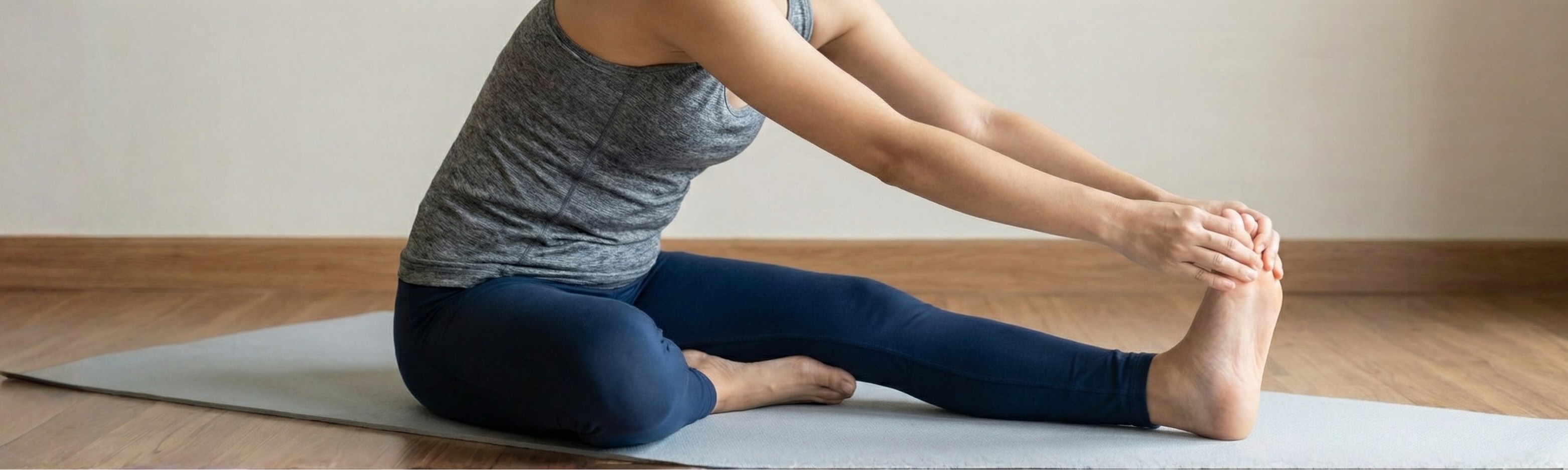
Best Exercises for Second Toe Capsulitis
Second toe capsulitis is persistent and debilitating. It can vary from mild discomfort to a burning or bruised pain under the base of the second toe that can make every step feel like you're walking on a pebble.
The good news? With the right combination of exercises, footwear changes, and targeted support, most people can dramatically reduce their pain and avoid more invasive treatment.
Jump to Section
What Is Second Toe Capsulitis?
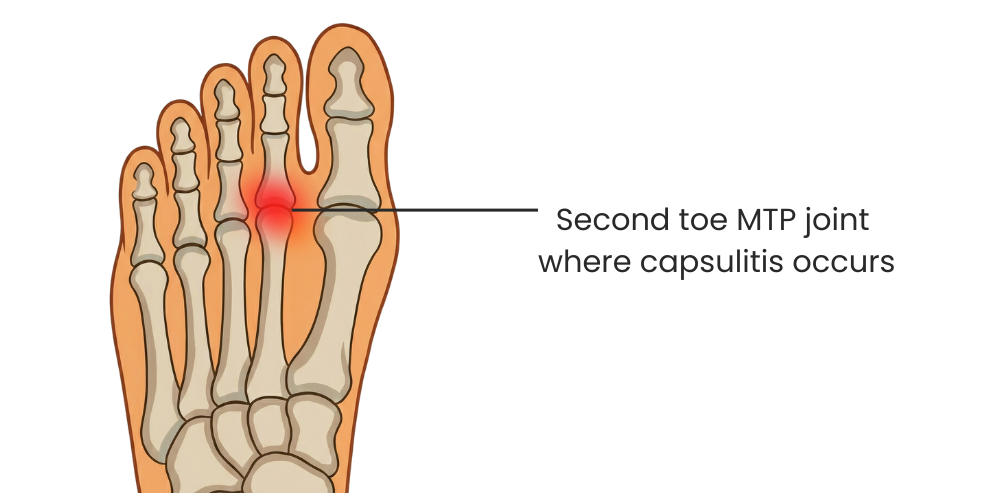
Each toe joint in your foot is surrounded by a stabilising "capsule". This is a tough, ligament-like sleeve that keeps the joint aligned and helps absorb pressure when you walk.
Second toe capsulitis occurs when the capsule at the base of the second toe (the 2nd MTP joint) becomes irritated and inflamed from overload.
Over time, if the pressure on this joint isn't reduced, the capsule can weaken and the toe may start to drift upwards or towards the big toe (known as a crossover toe).
That's why effective treatment for capsulitis of the second toe must do more than just calm the inflammation. It must also change how your foot loads with every step.
Why Second Toe Capsulitis Exercises Matter
Exercises are one of the most powerful tools for treating capsulitis because they:
- Reduce pressure on the inflamed 2nd MTP joint by improving foot and ankle mechanics.
- Restore even load distribution across the metatarsal heads instead of overloading the second toe.
- Strengthen intrinsic foot muscles that support the arch and forefoot so the problem doesn't keep coming back.
When you combine the right capsulitis toe exercises with smart footwear and targeted insoles, you can often avoid injections and surgery altogether.
Best Exercises for Second Toe Capsulitis
Below are the most effective second toe capsulitis exercises for pain relief, improved mobility, and long-term stability. Start gently and never push into sharp pain.
1. Calf Stretch (Wall Stretch)
Why it works: Tight calves limit ankle flexion when you walk causing your heel to lift too early and pressure in the forefoot increases. Loosening the calf muscles allows the heel to lift later meaning your foot stays on the ground longer and reduces pressure on the second toe.
How to do it:
- Stand facing a wall.
- Place the ball of the foot you want to stretch against the wall and keep the heel planted on the ground.
- Lean forward until you feel a stretch in the calf.
- Hold for 30 seconds, then switch sides.
- Repeat 2–3 times per leg, twice daily.
2. Toe Extensor Stretch
Why it works: Tight toe extensors can pull the second toe upwards, increasing strain on the capsule beneath it.
How to do it:
- Sit with your foot on your opposite thigh.
- Gently curl toes 2–5 downward with your hand until you feel a stretch on the top of the foot.
- Hold 30 seconds, repeat 2–3 times.
- Switch sides and repeat.
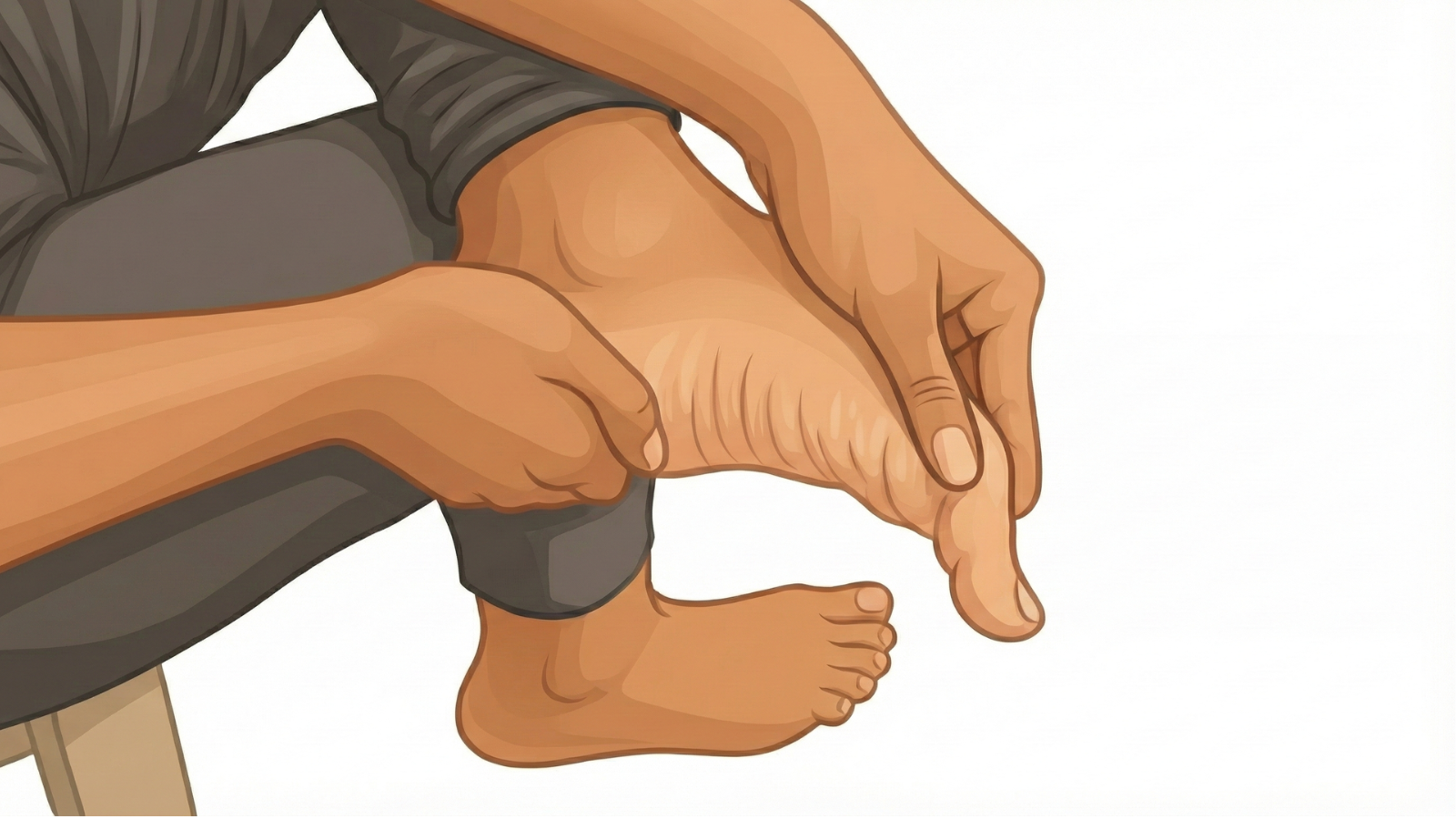
3. Big Toe Mobility Stretch
Why it works: If the big toe can't bend properly, the second toe is forced to take over during push-off, worsening capsulitis.
How to do it:
- Hold your big toe and gently lift it upwards (towards you) until you feel a stretch under the toe.
- Hold for 30 seconds, repeat 2–3 times.
4. Ankle Circles
Why it works: Improves overall ankle mobility and helps restore a smooth heel-to-toe gait, rather than "dumping" force into the forefoot.
How to do it:
- Draw slow circles with your foot — 10 in each direction..
5. Short Foot (Arch Doming)
Why it works: Strengthens the small muscles that support your arch and reduce overload on the second metatarsal.
How to do it:
- Sit or stand with your foot flat on the floor.
- Without curling your toes, gently pull the ball of your foot towards your heel to "shorten" the foot.
- Hold for 5 seconds, relax, and repeat 10–15 times.
6. Toe Yoga (Big Toe vs. Lesser Toes)
Why it works: Improves toe control and helps restore the big toe's role in push-off so the second toe doesn't have to compensate.
- Lift only your big toe while keeping toes 2–5 on the ground.
- Then keep the big toe down and lift toes 2–5.
- Do 10 reps of each, once per day.
7. Towel Scrunches or Marble Pickups
Why it works: Builds strength in the flexors and stabilisers of the toes, improving forefoot support under load.
- Place a towel on the floor and scrunch it towards you with your toes.
- Or pick up marbles/pebbles with your toes and drop them into a container.
- Do 10–15 reps per foot.
8. Heel Raises (Progressive)
Why it works: Strengthens the calf and foot, training a smoother, more controlled push-off that doesn't drive all the force through the second toe.
- Week 1: Double-leg heel raises, 10–12 reps.
- Week 2: Slower, controlled raises focusing on even pressure across the forefoot.
- Week 3: Single-leg heel raises if pain allows.
9. "Soft Step" Gait Drill
Why it works: Teaches you to walk with shorter steps that reduce pressure on the second toe.
How to do it:
- Walk as if you're trying not to make any noise using a slightly shorter stride, softer push-off, and a smoother roll through the foot.
- Practise this for 2–3 minutes at a time.
Insoles & Load Management for Second Toe Capsulitis
Exercises change how your muscles work. Insoles change where the pressure goes. For capsulitis, you usually need both.
A well-designed insole for second toe capsulitis should include:
- Firm arch support to prevent the midfoot collapsing and overloading the second metatarsal.
- Metatarsal pad/dome placed just behind the 2nd metatarsal head to shift pressure away from the inflamed joint.
- Deep heel cup to centre and stabilise the heel.
- Depression under the second toe when the joint is extremely sensitive.
This combination reduces painful pressure on the capsule while your exercises and gait retraining fix the root cause.
Full Treatment for Capsulitis of the Second Toe
The most successful treatment for capsulitis of the second toe combines four key elements:
1. Offload the Joint (Immediate Relief)
- Supportive, stiff-soled footwear.
- Insoles with arch support and a metatarsal pad.
- Avoiding barefoot walking on hard surfaces.
- Ice for flare-ups (10–15 minutes, as needed).
2. Mobility Work
Stretch calves, toe extensors, and the big toe to give your foot the range of motion it needs to share load more evenly.
3. Strengthening & Control
Use short foot, towel scrunches, toe yoga, balance work, and heel raises to build a stronger, more stable forefoot.
4. Gait Retraining
Practise "soft step" walking, shorter strides, and better tripod balance so your second toe isn't the only structure absorbing load at push-off.
Surgery is usually only considered in severe cases where the joint is unstable or the toe has significantly drifted. Most people improve with consistent, conservative care.
How ForefootFix Helps With Second Toe Capsulitis
ForefootFix is designed specifically for forefoot pain patterns like second toe capsulitis, combining targeted insoles with a structured 21-day exercise plan.
1. Personalised Assessment
Our 60-second assessment identifies your exact pain pattern and matches you to an insole design that offloads the overloaded joint (2nd MTP, 3rd MTP, big toe, or full forefoot).
2. Targeted Insole Design
Each ForefootFix insole is engineered to redistribute pressure away from the inflamed capsule using arch support, a metatarsal dome, a deep heel cup and a depression under the second toe, so you feel relief as soon as they go into your shoes.
3. 21-Day Foot Mechanics Reset
You also get a simple 21-day program of daily 3–5 minute mechanics fixes that retrain how your foot loads so the pain doesn't just fade temporarily, it stays away for good.
Start Your Recovery Today
Second toe capsulitis won't fully settle if the joint keeps being overloaded. The sooner you offload the area, support it properly, and retrain how your foot moves, the faster you'll notice progress.
Ready to find out which insole design and exercise plan is right for you? Take our 60-second foot pain assessment to get personalised recommendations and start your journey to pain-free walking.