What Causes Pain in the Ball of the Foot?
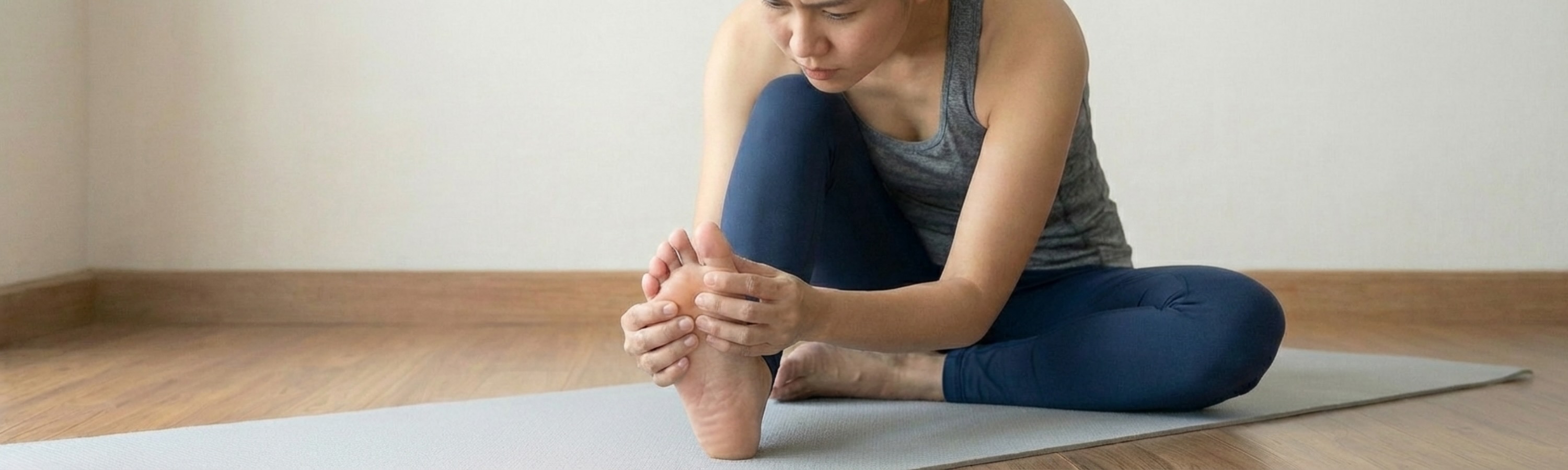
Ball of foot pain (also called metatarsalgia) is one of the most common foot complaints and one of the most misunderstood. It is usually caused by overuse, stiffness of the big toe, poor fitting shoes or an acute injury like hyperextension or impact injury..
Unfortunately it can be slow to heal due to limited blood flow to the area and the fact that most people can't avoid being on their feet for long parts of the day. Fortunately, there are things you can do to help limit pain and speed up the healing process.
Jump to Section
What Is "Ball of Foot Pain"?
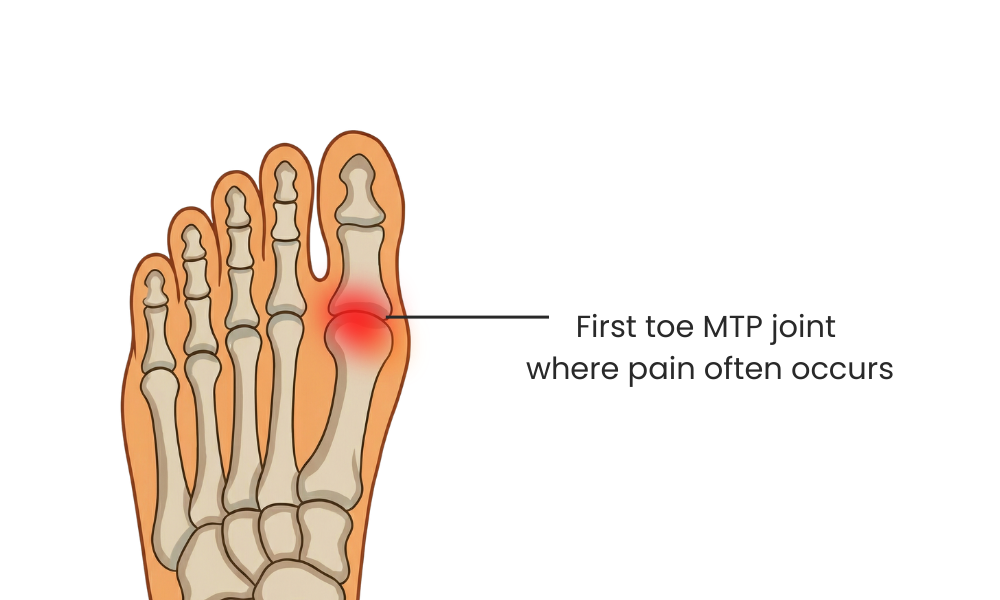
The "ball of the foot" is the padded area under the head of the metatarsal bone (just behind your big toe). When that area becomes painful, it's often labelled metatarsalgia which is an umbrella term that means pain in the forefoot, not one single diagnosis.
To fix it long-term, you need to identify what's being overloaded (a joint capsule, a nerve, a bone, or soft tissue) and why your foot is loading that spot in the first place. That's where most generic advice falls short.
Most Common Causes of Ball of Foot Pain
Below are the most common causes of ball of foot pain, plus the tell-tale symptom patterns. (This helps you narrow down what you're dealing with before you choose treatments.)
1) Metatarsalgia
This is the classic "general" ball-of-foot pain: aching, burning, or bruised soreness under the MTP joint. It typically worsens with standing, walking, running, or thin flexible shoes.
2) Sesamoiditis
Sesamoiditis is inflammation of the two small sesamoid bones and surrounding tendons under the ball of your big toe, causing dull, aching pain. Pain often worsens with walking, running, or bending the toe, common in athletes like dancers and runners due to overuse from repetitive pressure on the forefoot.
5) Stress fracture or acute injury
You'll probably know if this is the cause. Usually comes on after a sudden training increase, jump, trip, or impact, and especially if there's swelling. Usually results in pain moving the toe in any direction and is usually more severe than metatarsalgia.
6) Arthritis and joint inflammation
Stiffness, swelling, pain that's worse in the morning, or pain across multiple joints may point toward arthritis-related causes.
7) Skin-related causes (callus, cracked skin, verruca)
Sometimes the pain isn't the joint at all — it's pressure on hardened skin. A callus can feel like a deep bruise under the ball of the foot. Usually you'll be able to see if there's a callus, crack or verruca.
Why It Happens: The Real Root Causes
Most ball-of-foot pain is driven by a simple biomechanical reality: the forefoot is taking more pressure than it should. That can happen for a few common reasons.
- Footwear: high heels, narrow toe boxes, thin soles, or shoes that bend easily at the forefoot increase load on the ball of the foot.
- Sudden activity changes: big jump in walking/running/standing time causes micro-trauma and inflammation.
- Foot shape & mechanics: bunions, high arches, flat feet, or restricted big toe motion can shift load forward onto specific metatarsals.
- Tight calves / limited ankle mobility: forces earlier heel lift and "dumps" pressure into the forefoot.
- Bodyweight: more load = more pressure through a small area of the foot.
What You Can Do Now for Ball of Foot Pain
If your pain is mild-to-moderate, the best first step is to reduce forefoot load and calm irritation.
- Reduce impact for 7–14 days: swap running/jumping for cycling, swimming, or shorter walks.
- Wear supportive shoes indoors: avoid barefoot walking on hard floors during a flare.
- Ice after activity: 10–15 minutes if it helps symptoms (don't ice directly on skin).
- Try a metatarsal pad: placed just behind the painful area to offload the metatarsal heads (placement matters).
- Address calf tightness: improving ankle mobility reduces early heel lift and forefoot overload.
A simple "pressure reset" walking cue
For 2–3 minutes a day, practise shorter, softer steps and a smooth heel-to-toe roll. In gait research, a gentle "shuffling/soft step" pattern can significantly reduce peak forefoot pressure.
Best Shoes for Ball of Foot Pain
If you only change one thing, change your shoes. The best shoes for pain in the ball of the foot reduce bending at the forefoot and spread pressure across a larger area.
Look for:
- Stiffer forefoot or rocker sole (reduces load at push-off)
- Wide toe box (reduces compression on nerves and joints)
- Supportive midfoot (helps shift load off the metatarsal heads)
- Low-to-moderate heel (high heels push weight forward)
Avoid:
- High heels
- Thin, flexible soles
- Narrow/pointed toe boxes
- Minimalist shoes during a flare
How Insoles Help Ball of Foot Pain (What Features Matter)
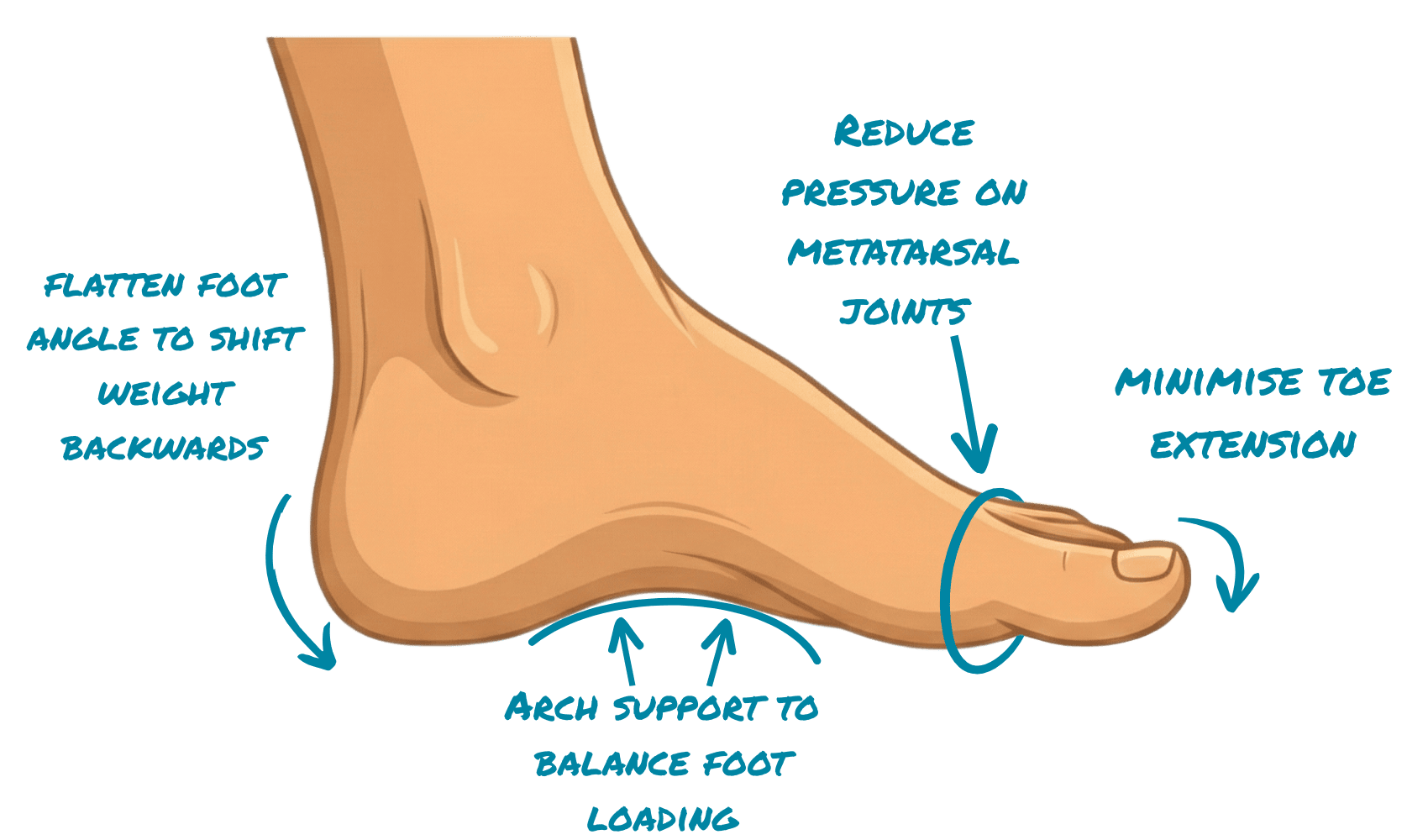
Cushioning alone can feel nice — but for many people it's not enough. The most effective insoles for ball of foot pain combine structure + targeted offloading to redistribute pressure away from the painful metatarsal head(s).
Based on insole-design evidence and pressure-mapping principles, the highest-impact features are:
- Robust arch support to reduce pressure shifting forward into the forefoot.
- Metatarsal pad/dome positioned ~5–10mm behind the metatarsal heads (not directly under the sore spot) to offload pressure.
- Targeted depressions / offloading zones under specific hot spots (e.g., under the big toe MTP joint) when the pain is focal.
- Deep heel cup / rearfoot stability to reduce forefoot "dumping" and improve pressure distribution.
When Should You Seek Medical Help?
It's a good idea to get assessed if ball of foot pain is persistent, worsening, or affecting your ability to walk. Guidance also recommends not self-diagnosing the exact cause because symptoms can overlap.
Get urgent advice if you have:
- Severe pain after an injury, or you can't weight-bear
- Marked swelling, bruising, or deformity
- Numbness/tingling that's new or worsening
- Diabetes and new foot pain (always treat this as higher risk)
The ForefootFix Approach
Most people try to "pad the pain" — but if the underlying loading pattern doesn't change, the pain usually returns. ForefootFix is designed to fix both parts of the problem: pressure now and mechanics long-term.
1) Match the insole to the painful spot
We match you to the exact insole design that offloads the overloaded joint (2nd MTP, 3rd MTP, big toe, or general metatarsal overload), using a quick assessment.
2) Reset the mechanics that caused it
You also get a simple 21-Day Foot Mechanics Reset (3–5 minutes a day) to restore better pressure distribution, improve big toe function, and reduce the gait patterns that keep triggering flare-ups.
Bottom Line
Ball of foot pain is usually caused by increased forefoot pressure — from footwear, overload, foot shape, or a specific condition like capsulitis, neuroma, or sesamoid irritation.
If you want the fastest route to relief, start by identifying where the overload is and why it's happening. Take our 60-second foot pain assessment to get a personalised recommendation.